Private Interviewer Notes
Last updated on
Using Private Interviewer Notes
As an interviewer, the Interview platform gives you the ability to type out any notes you have during the interview. All notes can be saved in Markdown.
✅The candidate does not have access to these notes.
To access the interviewer notes, simply click on the Interviewer Notes tab located in the right pane of the IDE, next to Program Output tab. You can switch between these tabs at any point during the interview.
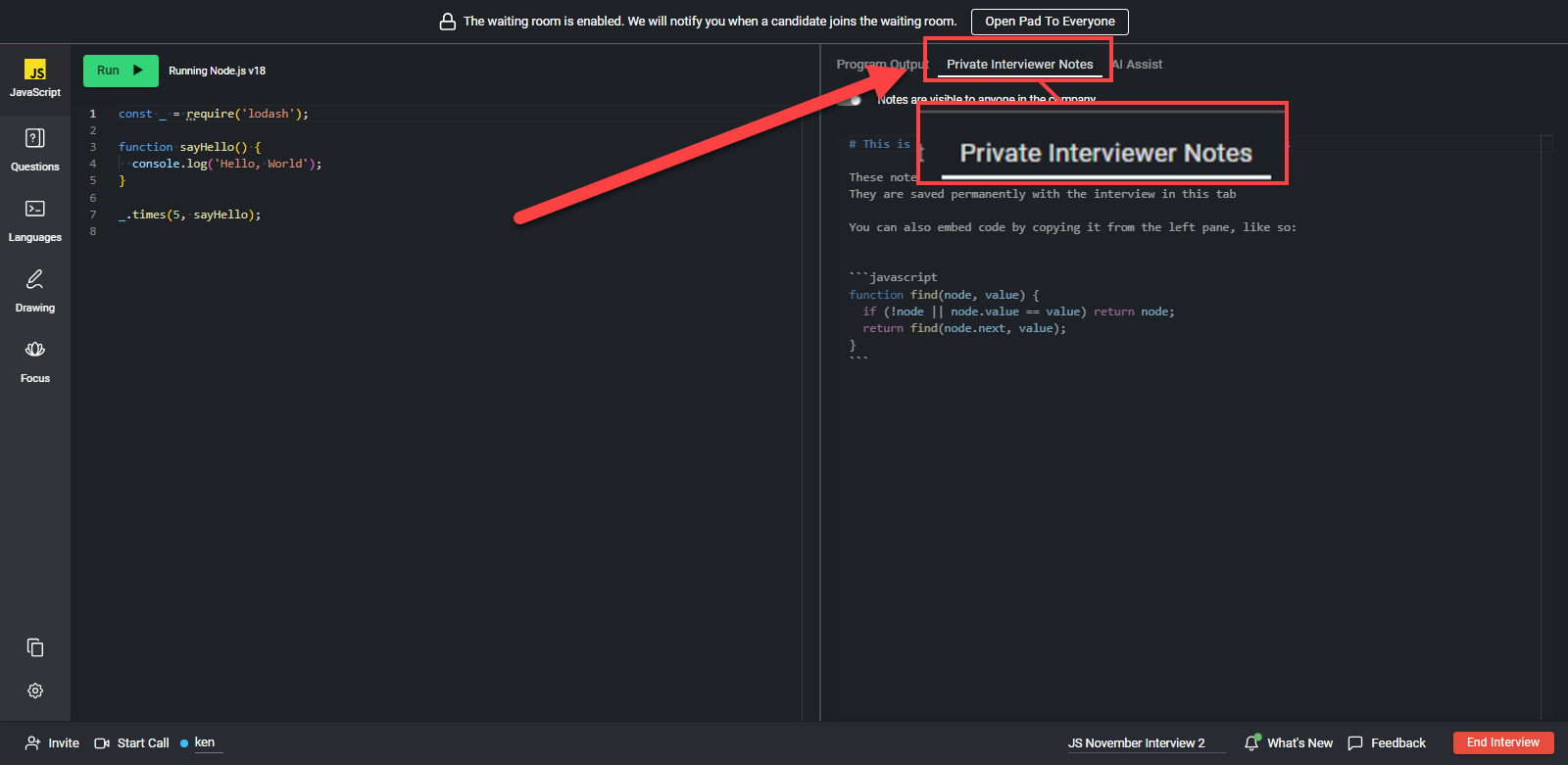
You can also input code into the interviewer notes section using Markdown. Here’s a Markdown example of how to write a JavaScript code block:
```javascript
    var recurse = 100;
    var recursed = 0;

    (function (callback){
      callback(callback);
    })(function(callback){
      recursed++;
      console.log('recursed ' + recursed + ' times');

      if(recursed < recurse){
        callback(callback);
      }
    });
```
Personal interviewer notes
By default the notes you take in the Private Interviewer Notes will be hidden from candidates, but they are still viewable by other members of your organization. However there may be instances where you also want the notes hidden from other Interview members as well.
A common use case for this is preventing employees who used Interview as candidates from viewing the notes from their own interview when they become employees.
To keep your Private Interview Notes private just to you, you can simply select the toggle at the top right of the pad until you see Notes are visible only to interviewers.
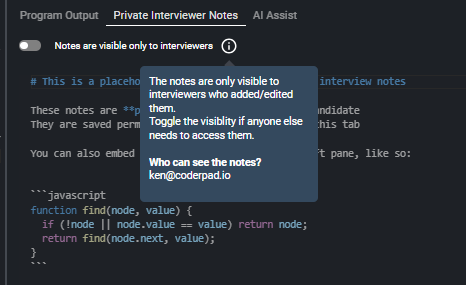
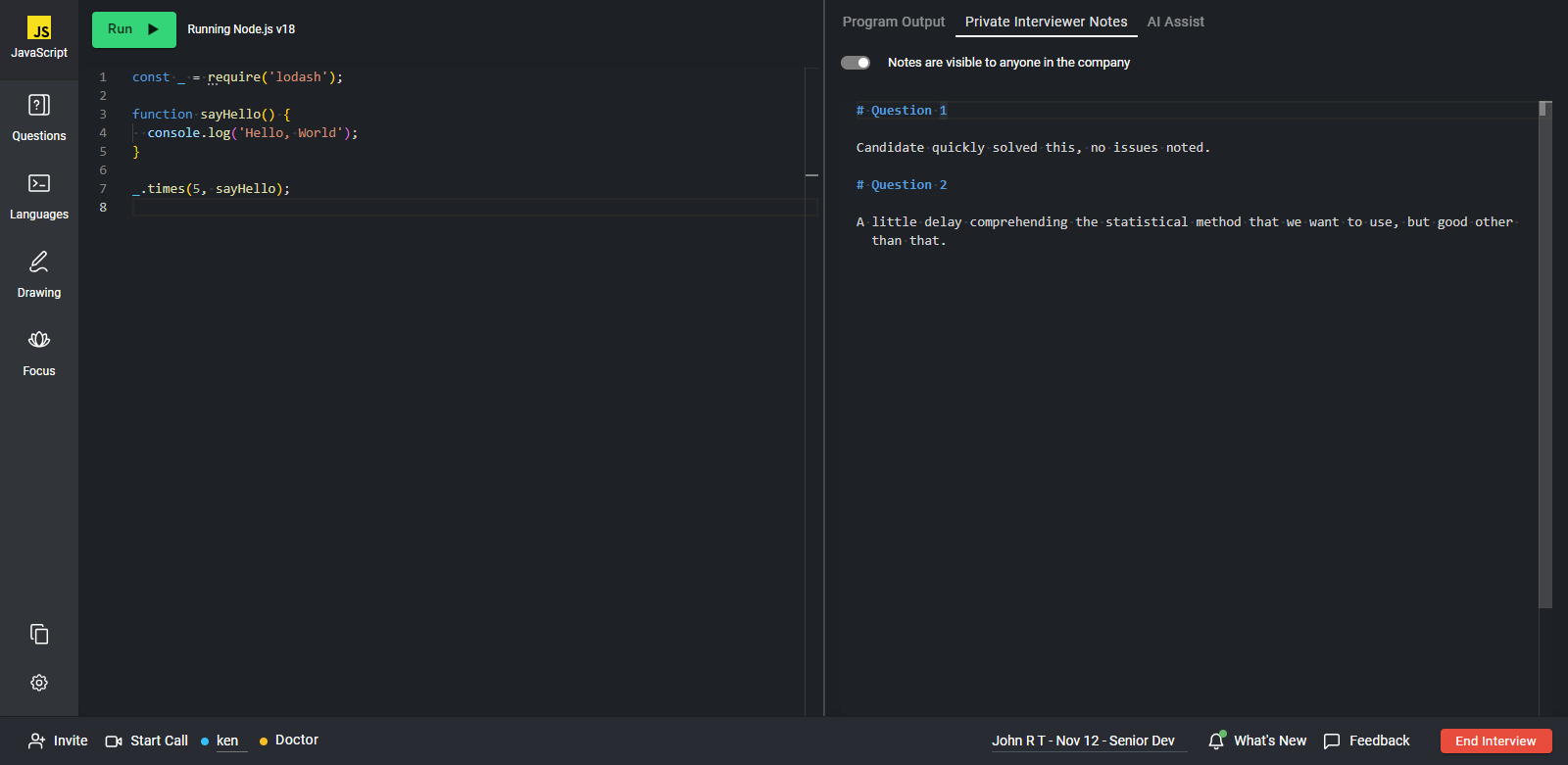
You can switch back to sharing the notes with the rest of your organization by clicking on the toggle again until it says Notes are visible to anyone in the company.
Using Rubrics to guide interview note-taking
Rubrics in CoderPad help your team take structured notes in live interviews, by aligning interview feedback with your organization’s evaluation criteria. Follow the instructions below to get started.
1. Create a rubric: Admins can add rubrics to your account from the Rubrics Dashboard (1). Click Create Rubric (2) to start from scratch or click Edit (3) to customize the provided example.

2. Import the rubric into an Interview pad: Interviewers can load a rubric into the Private Interviewer Notes tab by clicking + Add Rubric, either before or during the interview.

3. Take notes with the rubric: Use the rubric to guide areas of focus and note-taking during the interview. This helps ensure your notes align with your team’s evaluation criteria.
4. Add Notes to your ATS: After the interview, copy your rubric-based notes and paste them into the candidate’s scorecard in your ATS.
Tips
- Interviewers can ⭐ favorite rubrics for easy reference.
- If two interviewers are present, each can import and fill in their own copy of the rubric.
- Admins should keep rubrics up to date as your candidate evaluation criteria evolves.